
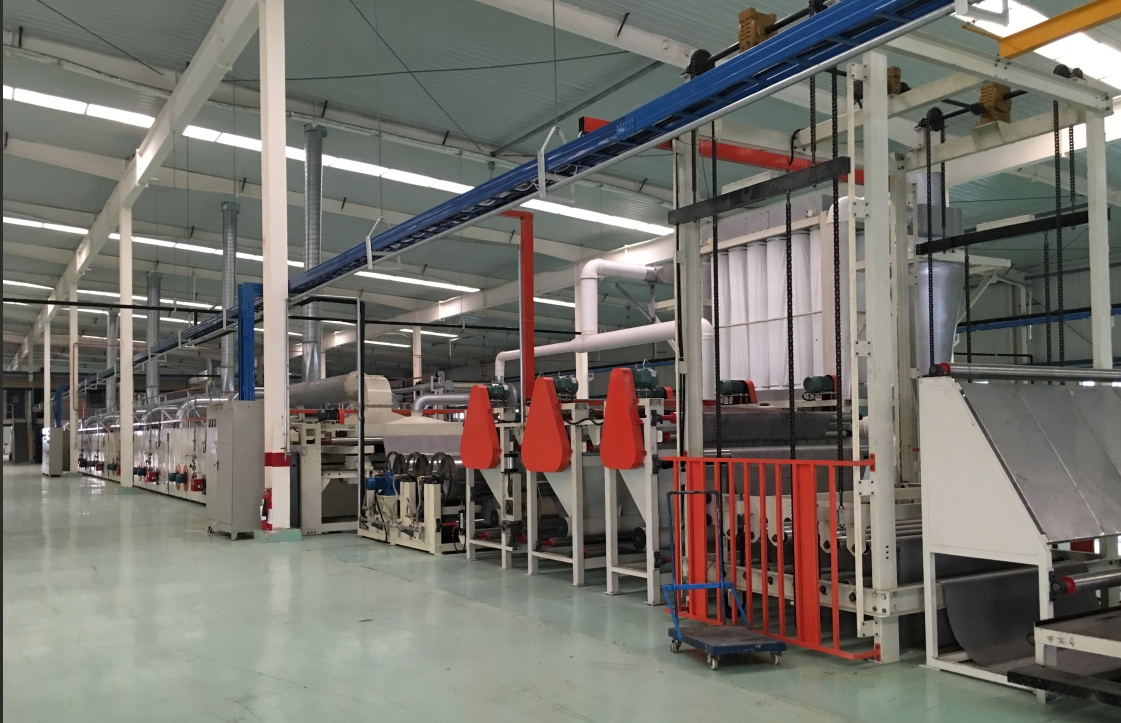
Uses a high-voltage electrostatic field to orient and implant short fibers onto adhesive-coated substrates, widely used in textile, packaging and decoration industries.
| Model / series | JDR180-220 |
|---|---|
| Nominal width | 180-200cm |
| Machine speed | 3-20m/min |
| Typical running speed | 3-8m/min |
| Heat source | thermal oil 15%; natural gas 80%; steam 5% |
| Oven | Configured to customer needs |
| Principle | High-voltage electrostatic field orients and implants short fibers |
| Applications | Decoration, automotive interiors, apparel and footwear, industrial |
Uses a high-voltage electrostatic field to orient and implant short fibers onto adhesive-coated substrates, widely used in textile, packaging and decoration industries.
Published USE: uses a high-voltage electrostatic field to orient and implant short fibers onto adhesive-coated substrates—textile, packaging and decoration industries.
Typical path: substrate infeed → adhesive coat (often upstream or same inquiry) → electrostatic flock chamber → oven cure / set → cool → brush / vacuum excess → rewind. Fiber length, adhesive open time, and field settings decide upright density and abrasion feel.
Oven is configured to customer needs. Heat-source mix on TECH favors natural gas for this series; plant energy still decides the proposal.
Model JDR180-220 is the published electrostatic flocking series on this page.
Nominal width 180–200 cm; machine speed 3–20 m/min; typical running speed 3–8 m/min. Flock density and adhesive cure usually hold the stable window well below mechanical max—sample before promising shift output.
Applications listed: decoration; automotive interiors; apparel and footwear; industrial (anti-slip pads, sealing strips as named in Key Advantages).
No clean flocking-specific publication was mapped from the verified assignee list for this product page. We deepen process and fit here without inventing patent numbers.
If your program joins blackout curtain coating with flocking, see curtain coater and the Flocking category for process position. Coating-head / infeed patents belong to those coating pages—not copied here as flocking patents.
Name substrate, adhesive system, flock fiber type/length, target hand feel, heat source, and whether adhesive coat is same-line or a second pass.
Related: curtain / blackout flocking coater when blackout film is the primary coat; multi-function coater for broader industrial films without flock focus.
Usually a fit: decoration, automotive interior, apparel/footwear, or industrial flock programs needing electrostatic implant; width inside 180–200 cm; willingness to sample adhesive and fiber.
Usually another page: blackout curtain coat without flock module primary (coating-02); carpet tile backing (Carpet); no adhesive/fiber data yet demanding locked abrasion acceptance values.
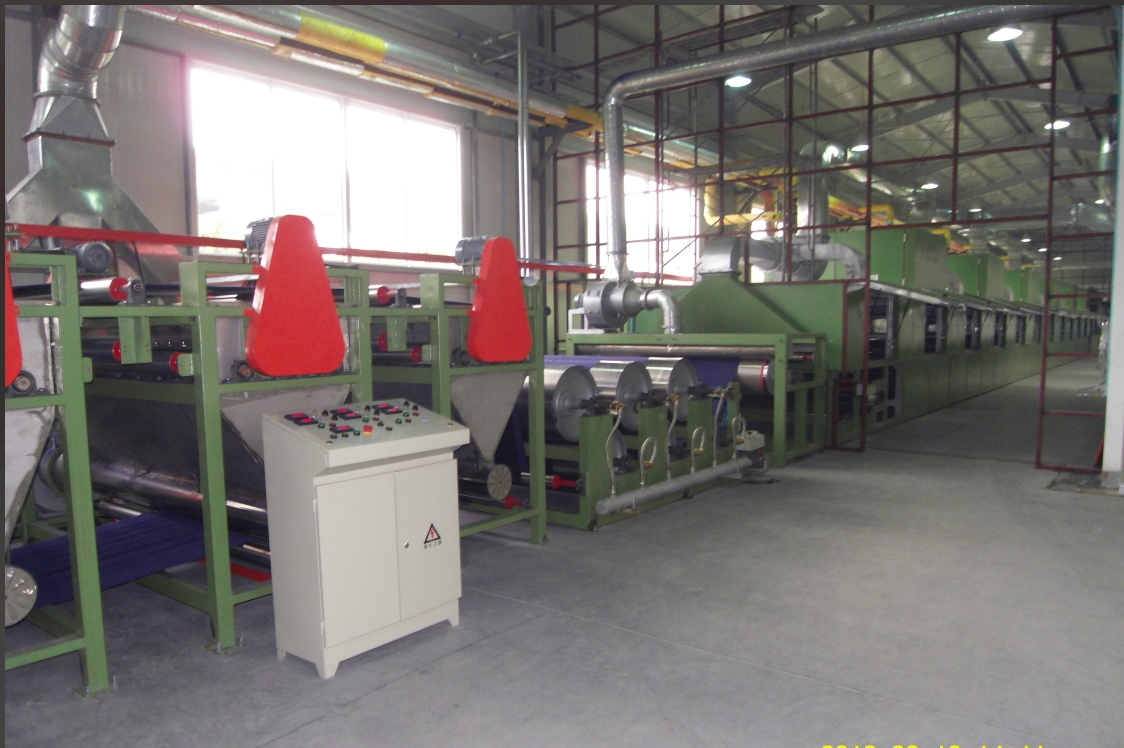
A: TECH on this page: model JDR180-220; nominal width 180–200 cm; machine speed 3–20 m/min; typical running speed 3–8 m/min; heat-source mix thermal oil 15% / natural gas 80% / steam 5%; oven configured to customer needs. Full fields are in the TECH table—mechanical max is not a flock-density guarantee.
A: Published principle: a high-voltage electrostatic field orients and implants short fibers onto an adhesive-coated substrate. Cure / set follows in the oven section configured to the order.
A: No. We did not map a clean flocking-specific publication for this page from the verified assignee list. Process and fit notes above do not invent patent numbers. Coating-related publications stay on coating model pages.
A: No. The published mix shows series tendency. Match plant energy and adhesive cure window; oven design follows the chosen source in the proposal.
A: If the primary SKU is blackout / flocked curtain finishing, start at coating-02. Use this flocking machine page when electrostatic flock implant is the primary module.
A: Yes. Xinghua custom-builds to your process. Machines run in 20+ countries; installation, operator training, and lifetime technical support are available under contract. Call +86 510 83397635 / +86 510 83382635 or email info@xhmachinery.com.